Why I Stopped Selling Pricing E-books
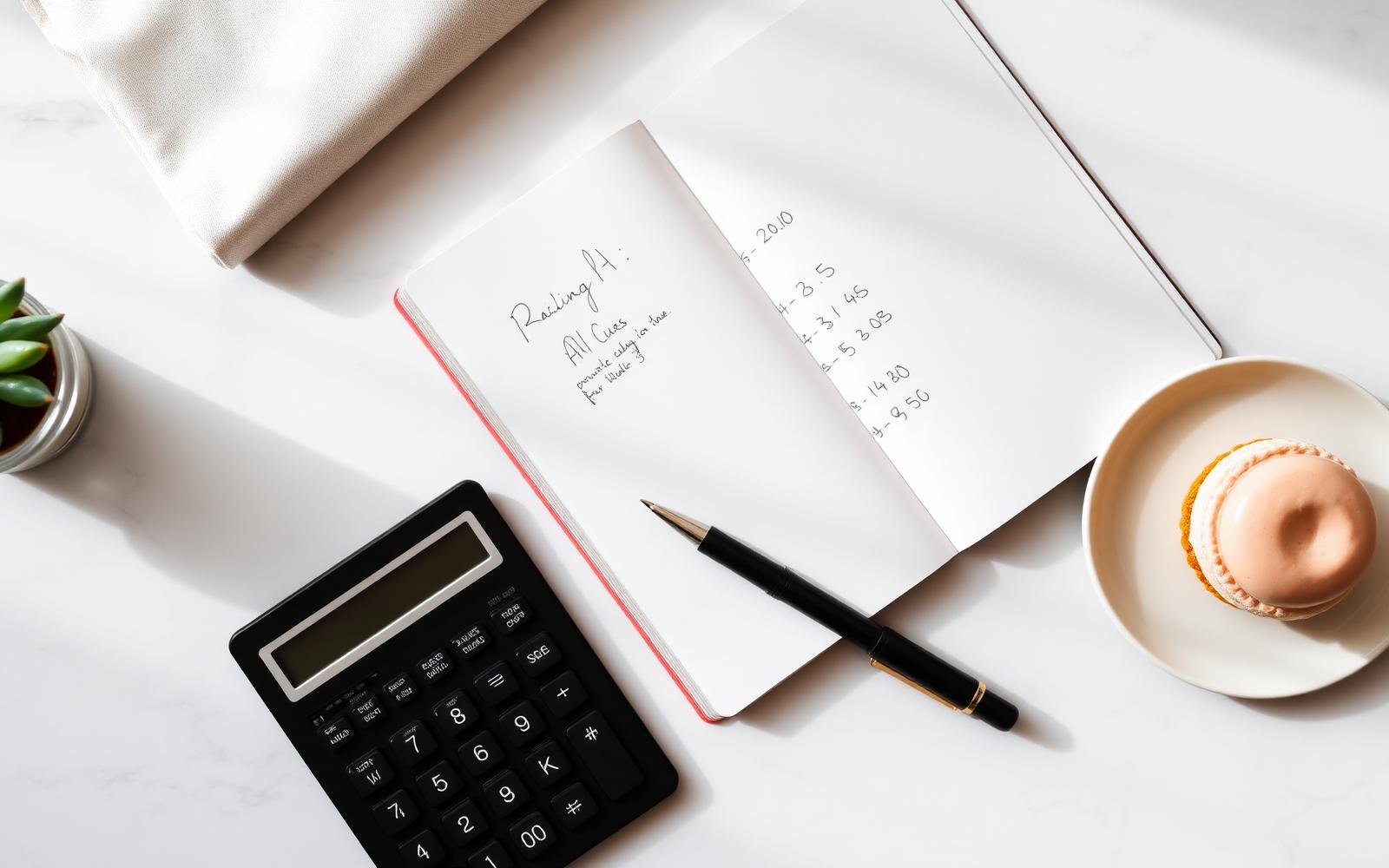
The e-books worked. People read them, understood the formula, and told me it clicked. Then most of them went right back to guessing.
A PDF gives you information once. Pricing is a decision you make again every single time you create a new dessert.
The e-books were genuinely helpful
I want to be fair to them. The pricing e-books did their job. They explained ingredient cost, labor, overhead, and margin in plain language, and plenty of treatmakers raised their prices because of them. I still believe in that education.
But information alone was not enough
Here is the pattern I kept watching. Someone would read the book, feel motivated, price one dessert correctly, close the book, and two weeks later a custom order would come in that did not match any example in the guide. So they would guess. Again.
- Read the book
- Price one thing correctly
- Close the book
- Get a new order that does not match the example
- Go back to guessing
And the same four questions kept landing in my inbox and my Lives, from people who had already bought the guide.
- How much should I charge for this?
- How do I calculate labor?
- How do I track inventory?
- How am I supposed to remember all of this?
That last question is the real one. The formula is not hard. Doing the formula correctly at 11pm, for the fourteenth order of the month, with butter costing more than it did in March, is hard. That is a memory problem, not a knowledge problem.
Treatmakers did not need another PDF. They needed something that remembered their numbers for them.
What a system does that a guide cannot
A guide teaches you the math one time. A system holds your ingredients, your labor rate, your overhead, and your recipes so the math is already done the next time you sit down.
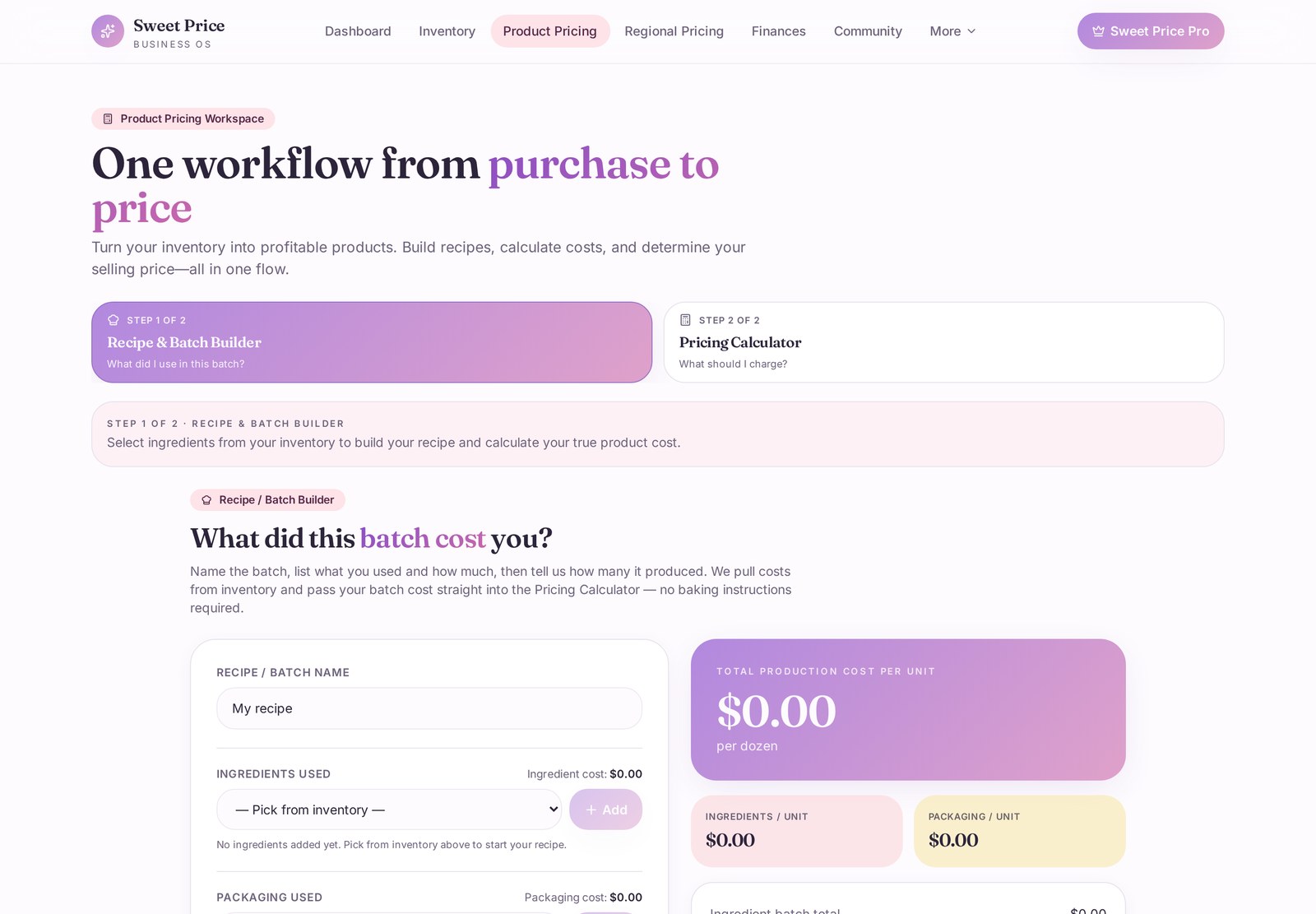
Build the recipe once. Every future order pulls its real cost automatically.
This is the part an e-book cannot do. When your flour price changes, every recipe that uses flour updates, and so does every price built on it.
It also removes the reason people quit. Nobody abandons pricing because they disagree with the formula. They abandon it because redoing it by hand every time is exhausting.
Sweet Price OS is the same lessons, in a tool
Everything I taught in the e-books and on Lives is inside Sweet Price OS now, except you do not have to hold it in your head. Instead of selling you information once, I can hand you something you use every week: add your ingredients, build the recipe, get a price you can defend, and compare it to what your region actually charges.
I will be honest about the limit of this too. I cannot do the work for you. You still have to enter your ingredients and be truthful about your time. But once you do, you never have to start from zero again.
Price every product with confidence
Build a recipe once, then let the Product Pricing Calculator do the math on labor, overhead, and profit.
Stop guessing your prices
Sweet Price OS turns ingredient costs, labor, and overhead into a profitable selling price in seconds. Free to start.
Start at the beginning of the series
Part 1: how a home treat business, and one forced stop, led to building Sweet Price OS.
Next in the series
Part 3: six lessons my treat business taught me about pricing, labor, and organization.
Have you used Sweet Price to price your desserts?
Share your experience with the Sweet Price community.
Frequently asked questions
Are the pricing e-books still available?
No. Everything they taught now lives inside Sweet Price OS, where the formula runs on your real numbers instead of an example in a PDF.
What is the difference between a pricing guide and a pricing calculator?
A guide explains the formula once. A calculator stores your ingredients, labor rate, and overhead so the formula runs correctly every time, without you rebuilding it.
Can I still learn the formula for free?
Yes. The blog covers the full formula, including ingredients, labor, overhead, and margin, at no cost. Start with the guide on pricing homemade desserts.
Related reading
Ready to price your products with confidence?
Sweet Price OS gives you inventory, recipe costing, and a pricing calculator in one place. Free to start.
Educational estimates and organizational tools, not financial, legal, or tax advice.