Six Lessons My Treat Business Taught Me
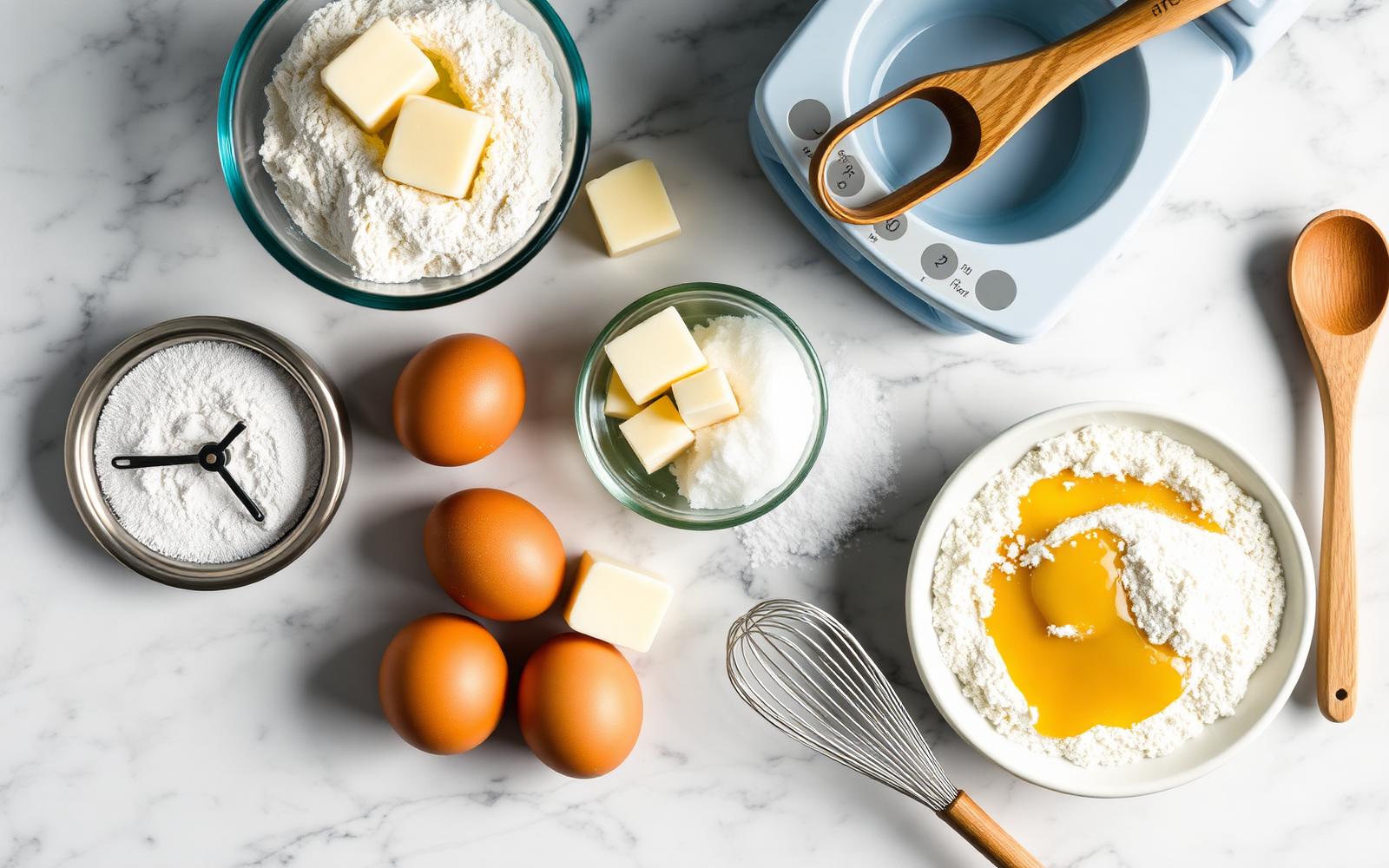
These are not lessons I read somewhere. These are the six things my treat business taught me, and a few of them cost me the business to learn.
Most dessert business advice is either pure encouragement or pure spreadsheet. What actually helped me was a short list of true things, with one specific step attached to each one.
If you have read part 1, you know how my treat business ended. What I want to do here is hand you what it taught me, so you get the lessons without the price tag I paid for them.
1. Systems reduce stress
I ran my business out of my memory, my Notes app, and a few random spreadsheets I rebuilt every time I needed them. That works right up until it does not. Then you are up at midnight trying to remember what you charged someone in March.
The busiest weeks were never stressful because of the baking. They were stressful because every decision was being made from scratch, while tired. The more organized your systems are, the calmer your business becomes.
Do this now: pick one place for order details and one place for costs. Two places total. Sticky notes and memory do not count.
2. Confidence comes from knowing your numbers
I used to shrink a little when someone asked my price, because deep down I was not sure it was right. I was guessing and hoping they would say yes anyway.
Pricing confidence is not pretending. It is proof. When you can see what an item costs you, what your time is worth, and what you keep, quoting stops being scary. You are not being difficult when you charge correctly. You are being accurate.
One custom order, timed honestly
- Shopping and prep: 1.0 hour
- Baking and cooling: 1.5 hours
- Decorating: 2.0 hours
- Packaging, delivery, cleanup: 1.0 hour
- Total: 5.5 hours × $22/hr
Labor cost = $121.00
Do this now: before your next quote, write the one sentence behind it, what it costs you, what your time is worth, and what you keep. You will not flinch.
3. Presentation sells before anyone tastes anything
Nobody has tasted your dessert when they decide to order it. They are deciding from a photo. Content matters. Branding matters. Photography matters. People bought from me because they first believed in what they saw.
Good presentation gets attention. Great products keep customers. You need both, and they do different jobs.
Do this now: reshoot your three best sellers in daylight, same background, same angle. A consistent look does more for you than a new flavor.
4. Customer experience matters
People remember how you made them feel far longer than they remember the buttercream. Answering messages, being clear about timing, showing up when you said you would: that is the part that turns one order into five.
Communication, reliability, and consistency build trust, and trust is what repeat customers are actually paying for.
Do this now: write two short message templates, one for order confirmation and one for pickup details. Send the same experience every time.
5. Your business should work even when life does not
A tree fell on my home, and because my business lived only inside my head and inside that house, my business fell with it. There was nothing to hand off, nothing to pause, nothing to restart from.
That is the lesson I would give away first if I could only give one. Businesses built only in your head are fragile. Good systems protect you during the seasons you did not plan for, and every one of us gets one of those eventually.
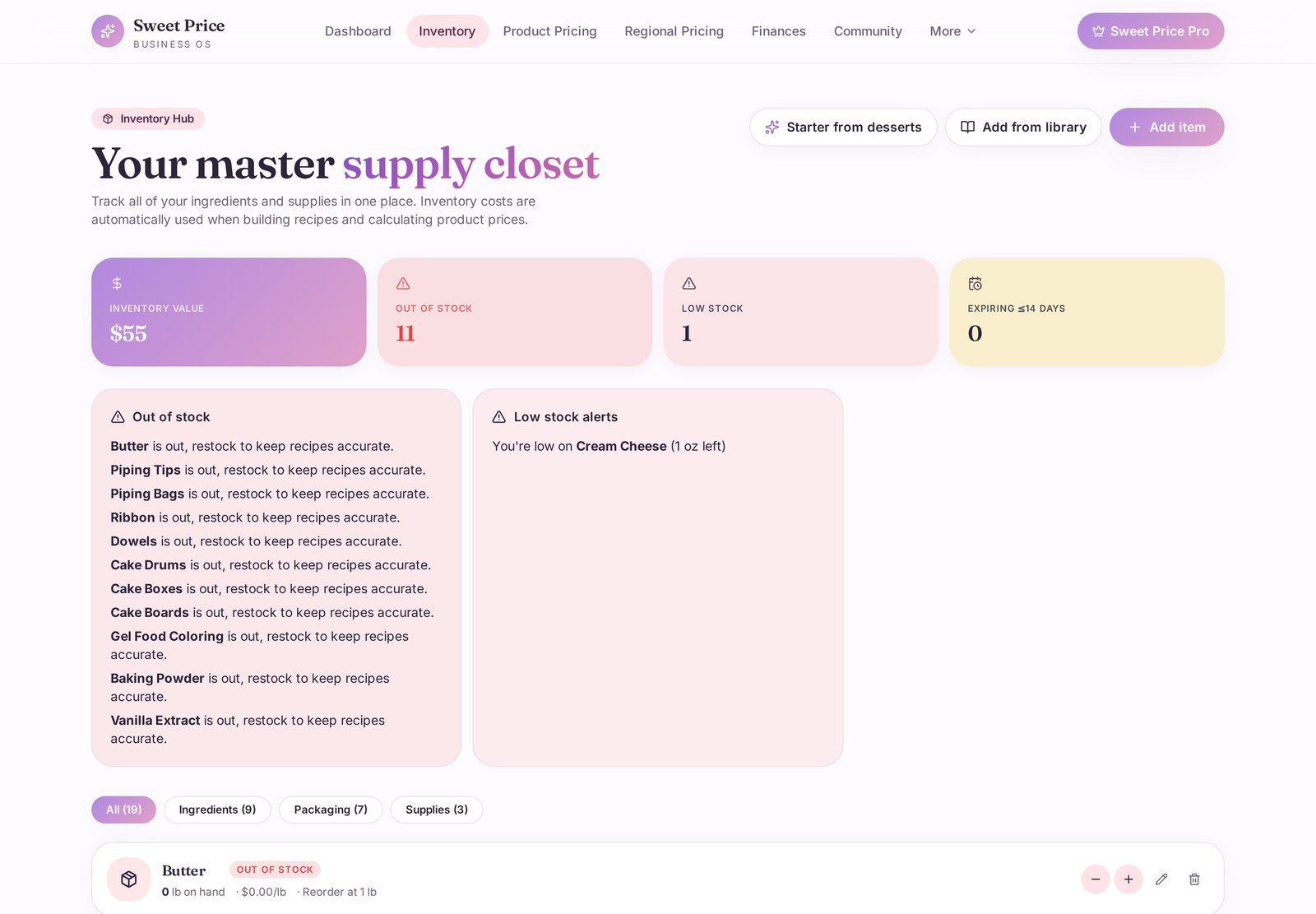
Ingredient records turn grocery receipts into accurate cost per unit.
Enter what you paid and how much you bought once. Every recipe and price built on that ingredient stays current from then on, whether you are in the kitchen this week or not.
Do this now: get your ten most-used ingredients recorded with package price and package size. That single hour is the start of a business that exists outside of you.
6. Talent brings customers, systems build businesses
You can bake incredible desserts and still struggle. I did. If your pricing, organization, inventory, and finances are not working together, talent alone will keep you busy and broke at the same time.
Talent brings customers. Systems build businesses. I learned that one the hard way.
Sweet Price OS exists because of that sentence. Inventory, recipe costing, labor and overhead defaults, pricing status, and regional comparison are not features I brainstormed. They are the six lessons above, turned into something you can actually use on a Tuesday night.
- Pricing at 3× ingredient cost and calling it a formula
- Leaving labor out because the order was 'small'
- Never updating prices after ingredient costs rose
- Tracking orders in three different places
- Comparing your price to a stranger's without knowing their costs
See what your local market actually charges
Compare your price to real ranges by city, state, and tier so you never leave money on the table.
Stop guessing your prices
Sweet Price OS turns ingredient costs, labor, and overhead into a profitable selling price in seconds. Free to start.
Start the series from part 1
How losing my treat business led me to learn pricing, and then build Sweet Price OS.
Part 2 of the series
Why I stopped selling pricing e-books and built a tool people could use daily.
Have you used Sweet Price to price your desserts?
Share your experience with the Sweet Price community.
Frequently asked questions
What is the most common home bakery mistake?
Leaving labor out of the price. Ingredients are usually the smallest cost in a custom order, and unpaid time is what turns a busy month into a broke one.
How often should I update my prices?
Review ingredient costs every quarter, and any time a staple like butter, chocolate, or cream cheese jumps noticeably. If your costs moved and your price did not, your profit absorbed the difference.
Do these lessons apply if baking is just a side business?
Yes, and arguably more. Side businesses have less room to absorb mistakes, so accurate pricing and simple systems matter even at ten orders a month.
Related reading

Ready to price your products with confidence?
Sweet Price OS gives you inventory, recipe costing, and a pricing calculator in one place. Free to start.
Educational estimates and organizational tools, not financial, legal, or tax advice.