How to Price Cakes for Profit: A Home Baker Guide
If you have ever handed a customer a cake price and quietly wondered whether it was actually enough, this guide is for you.
Most home bakers price cakes by feel, or by matching a neighbor. Both quietly leak money on every order. The fix is simple: build the price from the numbers up.
The cake pricing formula
Every profitable cake price is built from four parts. Skip a part and the price falls apart.
- Ingredients and supplies (flour, butter, boards, boxes)
- Labor (baking, decorating, cleaning, delivery)
- Overhead (utilities, insurance, packaging, marketing)
- Profit margin (growth, taxes, savings)
Selling price = Ingredients + Labor + Overhead + Profit
Step 1: Calculate ingredient cost per cake
Start with your receipt. Record what you paid, how much you bought, and how much you used for this specific cake. That gives you a true per-cake cost, not a guess.
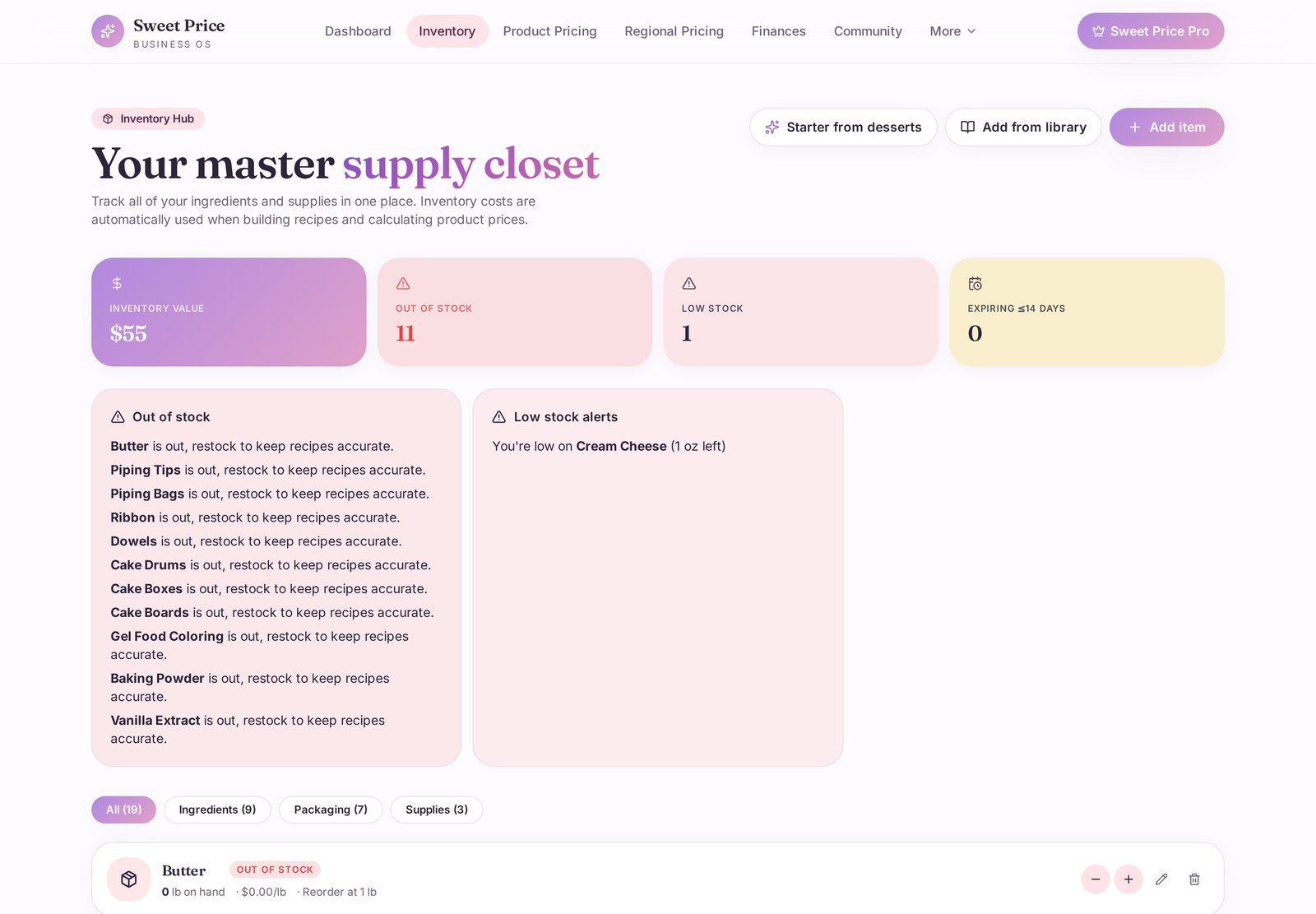
Every ingredient is stored once and reused across every recipe.
This is where you enter your ingredient prices one time. Sweet Price OS remembers each ingredient and calculates cost per gram, ounce, or cup automatically the next time you build a recipe.
Step 2: Pay yourself for labor
Labor is not free love. It is real work. Time every task from mixing to delivery and multiply by an hourly wage you would accept from a real employer.
Example time log for a 6-inch custom cake
- Mixing and baking: 1.5 hours
- Decorating: 3 hours
- Cleaning and packing: 0.75 hours
- Delivery: 0.5 hours
- Total time: 5.75 hours at $20/hr
Labor cost = $115.00
Step 3: Add overhead
Overhead is the cost of being in business. Most home bakers use 10 to 20 percent of ingredient plus labor. Add it so small cakes carry their share too.
- Utilities: oven, fridge, lighting
- Insurance and licensing
- Equipment: mixer, pans, tools
- Marketing and website
- Packaging and delivery fuel
Step 4: Add profit margin
Profit is what is left after costs and labor. It is what funds better tools, taxes, and the next season of orders. Twenty to forty percent is a healthy target for custom cakes.
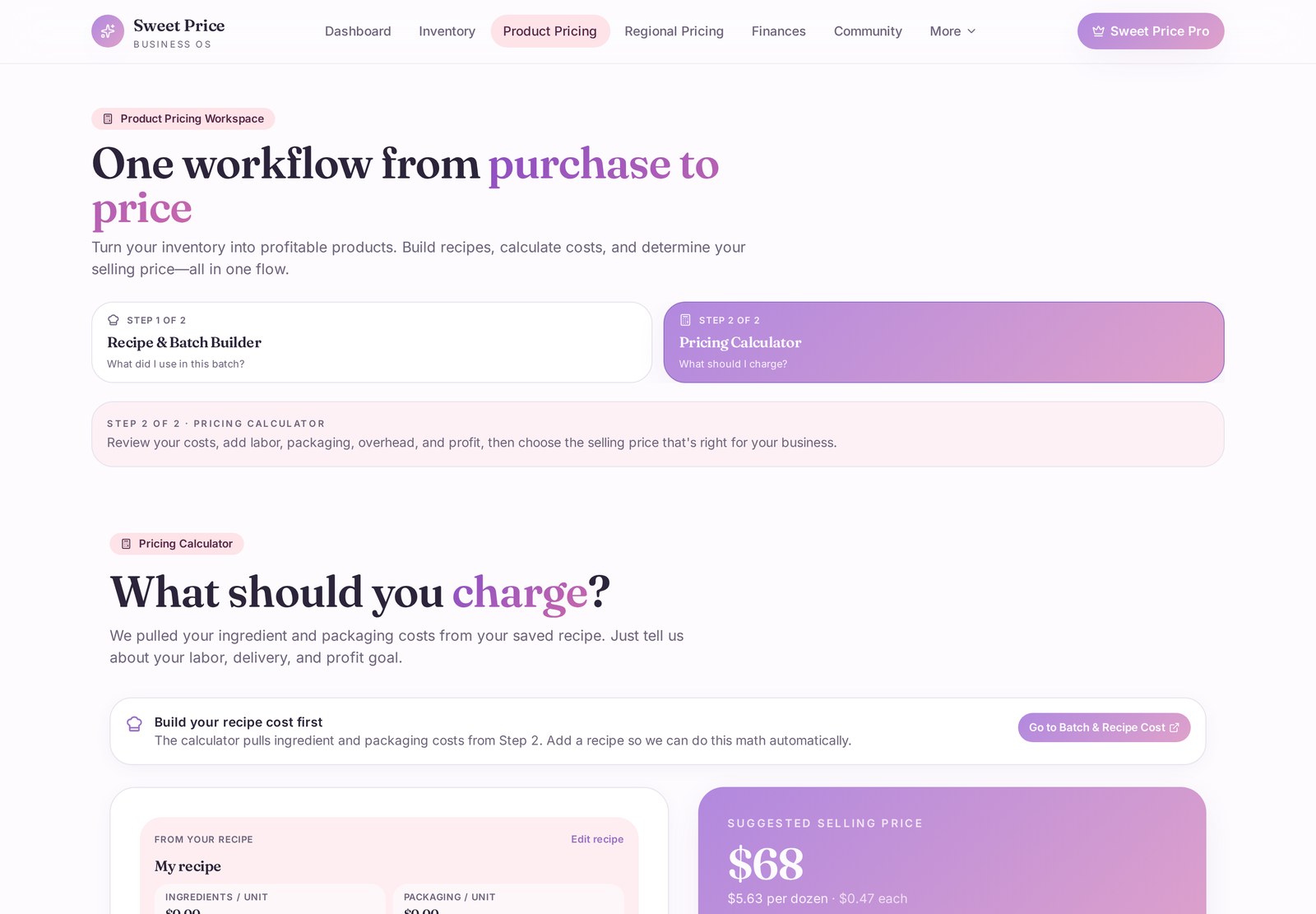
Watch your final selling price update instantly as labor and overhead are added.
Select your recipe, enter labor hours, packaging, overhead, and desired profit. Sweet Price OS calculates a profitable selling price in seconds and shows the exact breakdown so you can defend your number.
Price every product with confidence
Build a recipe once, then let the Product Pricing Calculator do the math on labor, overhead, and profit.
Step 5: Check your local market
A $191 cake is normal in one city and expensive in another. Regional pricing data tells you whether your price fits your market before you send the quote.
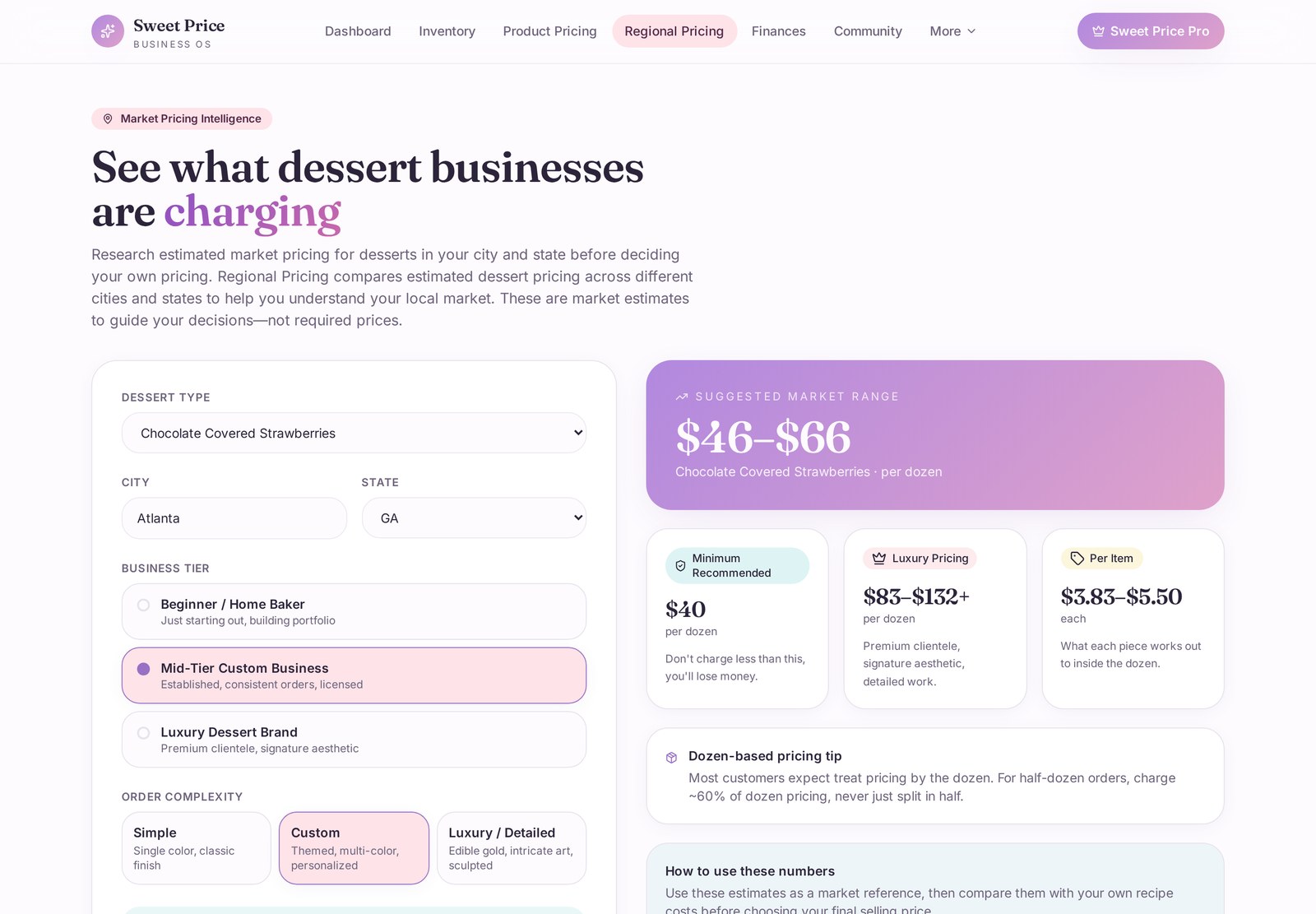
Compare your price against your city and state to see whether you are underpricing.
Pick your city, state, dessert type, and tier. Sweet Price OS shows the real market range so you can price with confidence instead of anxiety.
Common mistakes
- Charging only 3 to 5 times ingredient cost and forgetting labor
- Copying a friend's price without knowing their costs
- Not raising prices when butter, eggs, or flour go up
- Skipping overhead on small orders
- Giving away delivery and setup for free
See what your local market actually charges
Compare your price to real ranges by city, state, and tier so you never leave money on the table.
Stop guessing your prices
Sweet Price OS turns ingredient costs, labor, and overhead into a profitable selling price in seconds. Free to start.
Have you used Sweet Price to price your desserts?
Share your experience with the Sweet Price community.
Frequently asked questions
How much should I charge for a custom 6-inch cake?
For a mid-tier custom 6-inch cake, prices typically run $85 to $150 depending on design complexity and local market. Use the four-part formula to build your specific number rather than copying a range.
What profit margin is fair for home baked cakes?
Twenty to forty percent above ingredient, labor, and overhead is common for custom cakes. Luxury and wedding cakes often carry higher margins because of the skill and time involved.
Should I charge for delivery separately?
Yes. Delivery is time, fuel, and risk. Charge either a flat fee per mile or a set delivery minimum so it never comes out of your baking profit.
Related reading

Ready to price your products with confidence?
Sweet Price OS gives you inventory, recipe costing, and a pricing calculator in one place. Free to start.
Educational estimates and organizational tools, not financial, legal, or tax advice.