How Much Should I Charge for Homemade Cinnamon Rolls? (2026 Pricing Guide)
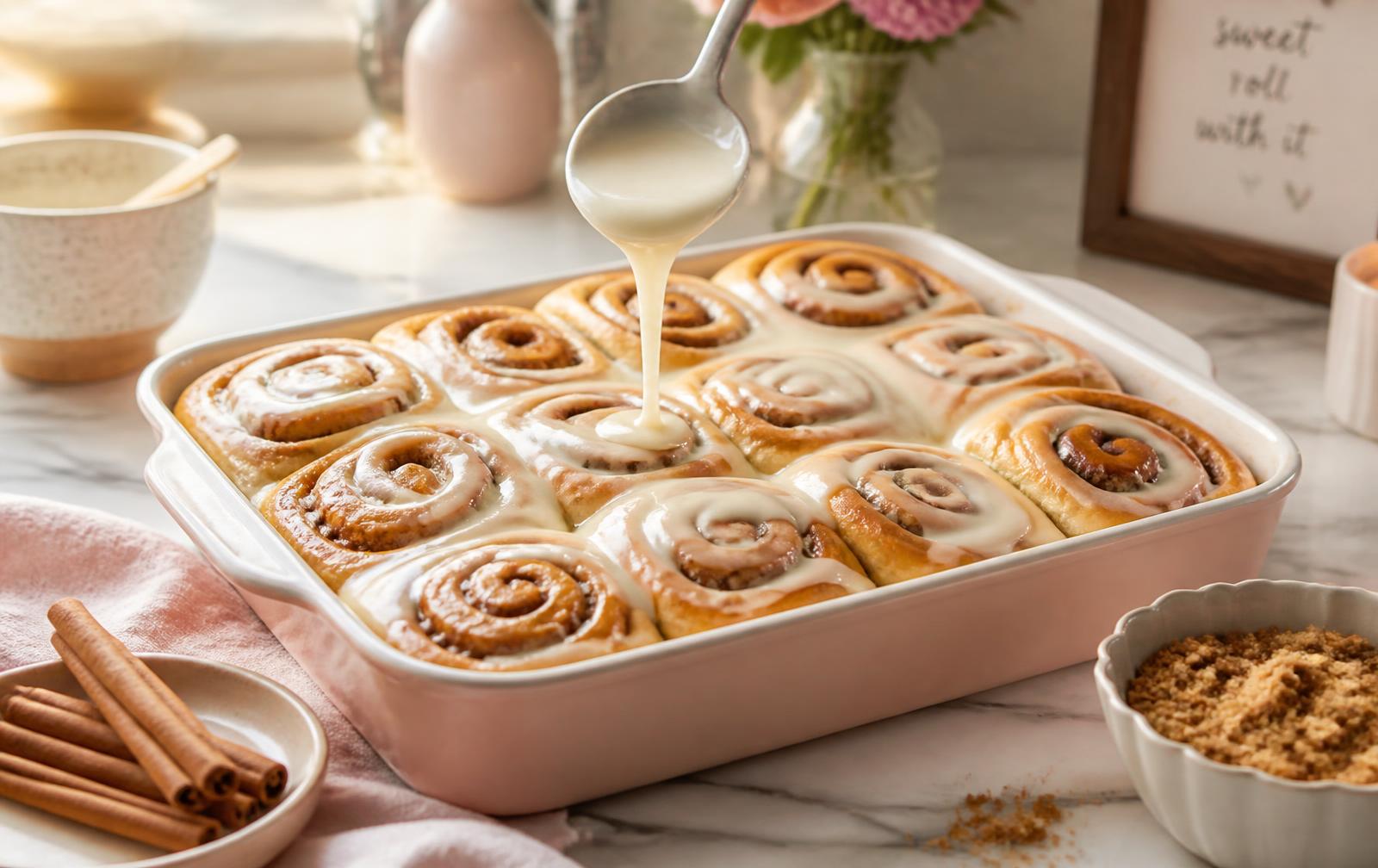
If you've ever looked at a pan of fresh cinnamon rolls and thought, "I have no idea what to charge for these," you're not alone.
A lot of home bakers end up guessing or copying someone else's prices. The problem is that every recipe, every city, and every business has different costs. The goal isn't to charge what someone else charges. It's to know what your cinnamon rolls actually cost to make so you can price them with confidence.
As someone who used to sell desserts, I know how tempting it is to look at another baker's menu and match their prices. I did it too. But what I eventually learned is that someone else's price doesn't tell you anything about their ingredient costs, their overhead, or the amount of time they spend on every order.
That's why homemade cinnamon roll pricing should always start with your numbers, not theirs.
How to Price Homemade Cinnamon Rolls
There isn't one universal price for a pan of cinnamon rolls, and anyone who hands you one is guessing on your behalf. What there is, is a repeatable process. Work through these five steps with your own receipts and your own kitchen, and you'll end up with a price you can actually defend when someone asks why it isn't $12.
- 1
Step 1: Calculate your ingredient costs
Every single ingredient counts, not just the expensive ones. Flour, yeast, butter, cinnamon, brown sugar, cream cheese, eggs, milk, vanilla, powdered sugar, salt, and anything else in your recipe. Take what you paid for the package, divide by how much is in it, and multiply by how much this batch used. The little things add up faster than you'd think, especially butter and cream cheese.
- 2
Step 2: Add packaging costs
Bakery boxes, bags, stickers, ribbon, labels, parchment paper, foil pans, and the little thank you card you tuck inside are all part of the finished product your customer receives. If it leaves your kitchen with the order, it belongs in the price. Packaging is one of the easiest costs to absorb by accident.
- 3
Step 3: Pay yourself for your time
Cinnamon rolls are a time heavy product. Mixing, proofing, rolling, cutting, the second rise, baking, frosting, packaging, and cleanup. Add those minutes up honestly and multiply by an hourly rate you would accept from any other job. Your labor isn't free just because you enjoy it, and pricing that ignores your time isn't a business, it's a very expensive hobby.
- 4
Step 4: Include overhead
Overhead is everything it costs to be in business that doesn't show up in the recipe: utilities, the oven and mixer wearing down, licensing, insurance, website fees, payment processing on every card swipe, and the supplies you replace over and over. These are easy to overlook because no single one feels big. Together they're the difference between profit and break even.
- 5
Step 5: Add profit
Profit is not the change left over at the end. It's what lets you replace the mixer when it dies, buy better packaging, run an ad, take a slow month, and pay yourself as the owner on top of paying yourself for labor. Decide your profit goal on purpose and build it into the price rather than hoping it shows up.
A real cinnamon roll pricing example
Here's what the math looks like for one batch. Your numbers will be different, and that's exactly the point.
One batch of homemade cinnamon rolls
- Ingredients: $18.00
- Packaging: $4.00
- Labor: $15.00
- Overhead: $3.00
Total cost = $40.00
$40.00 is what the batch cost you. It is not your selling price. Your selling price is that total plus the profit margin you decided on in Step 5. A baker aiming for a 30% margin lands somewhere very different from a baker aiming for 50%, and both can be right for their business. I'm not going to hand you one number here, because a $40 batch in a small town with cheap ingredients and a $40 batch in a high cost city with premium butter deserve different prices.
Once you know your true cost, you can also sanity check the result against your local market. That's research, not your pricing strategy. If your honest cost based price lands far above what your area supports, the answer is usually to look at portion size, packaging, or batch efficiency, not to quietly work for free.
Why copying another baker's price doesn't work
Say another baker sells a dozen cinnamon rolls for $30. That doesn't automatically mean you should.
- They may buy ingredients in bulk at a price you can't get yet
- They may have commercial equipment that cuts their labor in half
- They may work from a storefront with completely different overhead
- They may live in a city with a different cost of living
- They may accept a smaller margin because of their volume
- Or they may be underpricing themselves and not know it yet
- Only counting ingredients and calling that the cost
- Forgetting the packaging that leaves the kitchen with every order
- Leaving labor out because it feels awkward to charge for your own time
- Ignoring payment processing fees on card and app payments
- Pricing a pan once in 2023 and never revisiting it as butter prices climbed
Where Sweet Price fits
Everything above is the process. It works. It's also the reason most bakers do it once, promise themselves they'll do it for the next product, and never do, because rewriting the same math for every recipe on a legal pad gets old fast.
That's exactly what Sweet Price automates. You enter your ingredients once with what you actually paid, build the recipe, and it calculates your ingredient cost, packaging, labor, overhead, and profit goal using your own numbers. When butter goes up, every recipe that uses butter updates. It's the same recipe cost calculator math you'd do by hand, running quietly in the background, so home bakery pricing stops being a decision you dread and starts being a number you already know.
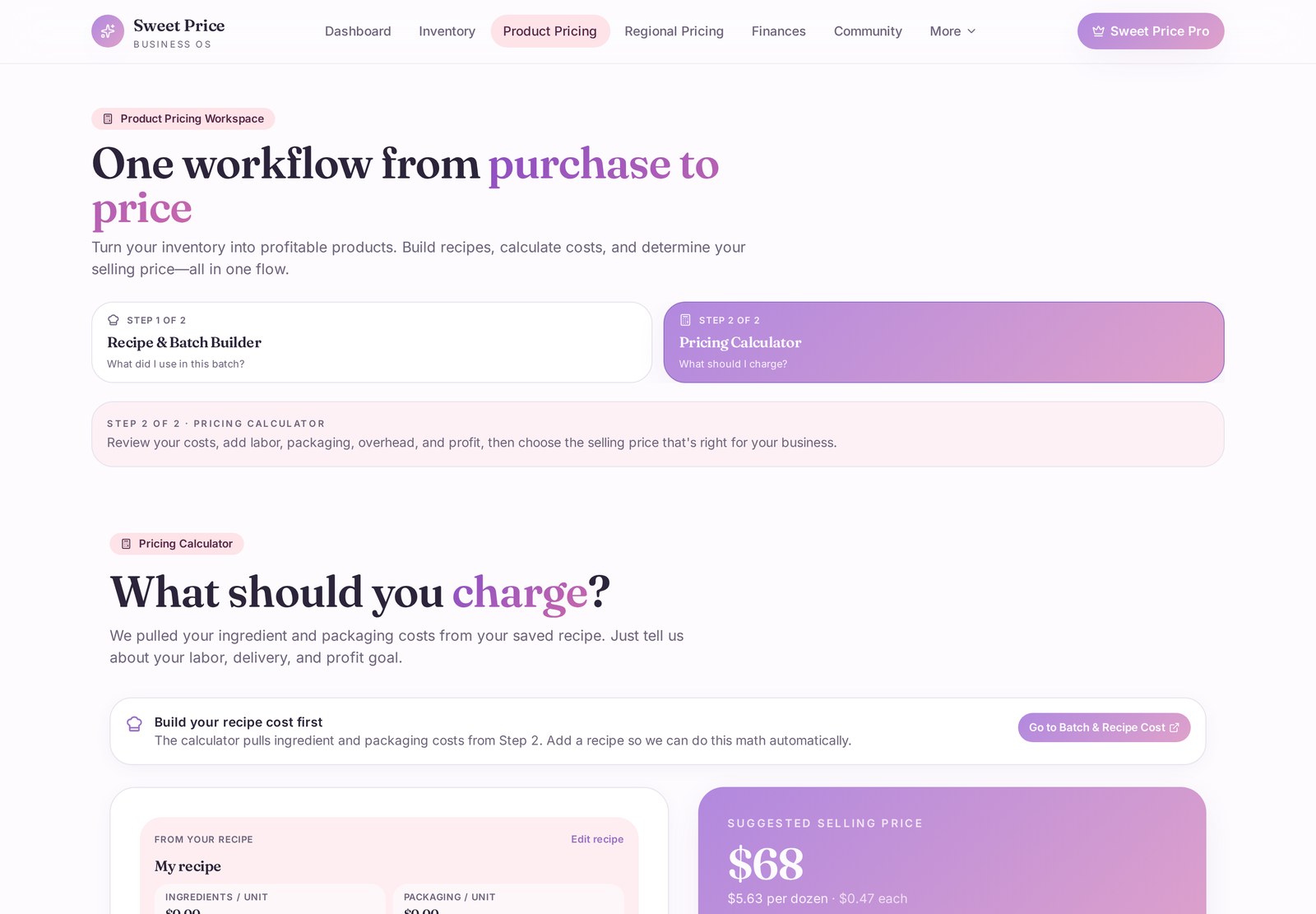
Your cinnamon roll cost, broken down the same way you'd do it on paper.
Ingredients, labor, overhead, and profit each shown separately, so you can see exactly which cost is driving the price and adjust with intention.
Confidence comes from knowing your numbers, not guessing them.
Stop guessing your prices
Sweet Price OS turns ingredient costs, labor, and overhead into a profitable selling price in seconds. Free to start.
Have you used Sweet Price to price your desserts?
Share your experience with the Sweet Price community.
Frequently asked questions
How much profit should I make on cinnamon rolls?
That's your decision, not a fixed rule. Many home bakers build in 20% to 40% profit on top of ingredients, packaging, labor, and overhead. Choose a target you can explain, then check it against what your market supports. What matters most is that the profit is planned rather than whatever happens to be left over.
Should I charge by the pan or individually?
Both work, and many bakers offer both. Pans are efficient because your labor is spread across more rolls, so the per roll cost drops. Single rolls carry more packaging and handling per unit, so price them higher per roll than the pan rate. Just make sure each option is priced from the same cost breakdown instead of dividing the pan price and hoping.
Should labor be included in my pricing?
Yes, always. Cinnamon rolls take proofing time, rolling, baking, frosting, and cleanup. If your price only covers ingredients, you're paying to work. Pick an hourly rate you'd accept from an employer and include every task, including the ones that happen while the dough rises.
Do I include delivery fees?
Keep delivery separate from the product price. Price the rolls on their own cost, then add a delivery charge that covers your mileage, gas, and the time spent driving. Bundling delivery into the item price makes your product look expensive and hides what the driving is actually costing you.
How often should I update my prices?
Review your ingredient costs at least quarterly, and any time a staple like butter, cream cheese, or flour jumps noticeably. If your costs went up and your price didn't, your profit quietly absorbed the difference. A quick review a few times a year keeps that from happening.
Is there a cinnamon roll pricing calculator I can use?
Yes. Sweet Price works as a cinnamon roll pricing calculator using your own ingredients, packaging, labor, overhead, and profit goal instead of generic averages. You build the recipe once and it recalculates whenever your costs change.
Related reading
Ready to price your products with confidence?
Sweet Price OS gives you inventory, recipe costing, and a pricing calculator in one place. Free to start.
Educational estimates and organizational tools, not financial, legal, or tax advice.