Cottage Food Business Basics: Start Legally, Price Confidently
Cottage food laws let you sell home-baked goods legally in every US state, with rules that vary a lot.
Most new bakers focus on the fun (design, flavors) and skip the two things that keep the business alive: legal setup and honest pricing.
What cottage food laws generally cover
- Non-hazardous baked goods (cookies, cakes, breads)
- Sales from your home kitchen without a commercial license
- Direct-to-consumer sales at markets, pickup, or delivery
- Annual sales caps that vary by state (often $25k–$100k+)
What they usually do not cover
- Products needing refrigeration (custard, cream cheese frosting rules vary)
- Wholesale to restaurants or retailers (in many states)
- Shipping across state lines
- Skipping labeling and allergen disclosure requirements
The legal minimum checklist
- 1
Read your state's cottage food law
Google 'your state cottage food law' and read the actual statute or health department page.
- 2
Take the required food handler course
Most states require a basic food safety certificate.
- 3
Label every product
Business name, ingredients, allergens, and the required cottage food disclaimer.
- 4
Track sales
Even small bakers should log every sale for tax and cap reporting.
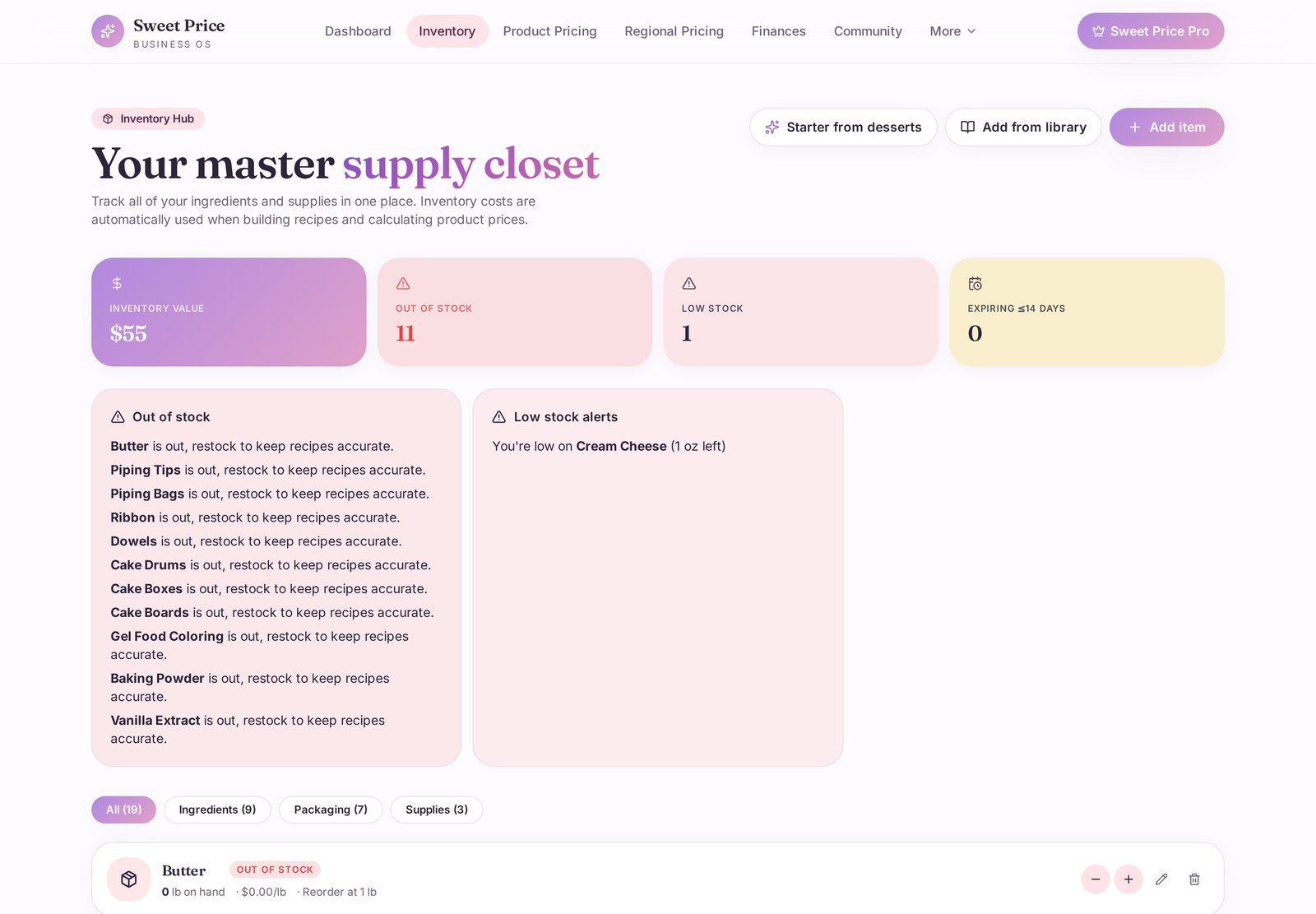
Ingredient records double as your labeling source of truth.
The same ingredient list that powers your pricing also feeds your labels. Sweet Price OS keeps one source of truth so recipe changes flow into cost and disclosure at once.
Now price like a real business
Legal setup is only half the job. Cottage food bakeries that survive treat pricing with the same seriousness as licensing.
Price every product with confidence
Build a recipe once, then let the Product Pricing Calculator do the math on labor, overhead, and profit.
Common mistakes
- Assuming your state matches a neighbor state's rules
- Selling refrigerated items without checking local rules
- Skipping labels because 'my customer knows me'
- Ignoring the annual sales cap until you cross it
See what your local market actually charges
Compare your price to real ranges by city, state, and tier so you never leave money on the table.
Stop guessing your prices
Sweet Price OS turns ingredient costs, labor, and overhead into a profitable selling price in seconds. Free to start.
Have you used Sweet Price to price your desserts?
Share your experience with the Sweet Price community.
Frequently asked questions
Do I need business insurance if I sell under cottage food?
Not always legally, but a $10 to $30 per month liability policy is worth it. One reaction claim will exceed years of premiums.
Can I ship cottage food across state lines?
Usually not. Cottage food laws are state-specific and most restrict sales to in-state customers. Check your state and any state you would ship to.
How do I handle allergens?
Disclose every major allergen on the label. Even if a customer 'knows,' the label protects you and them.
Related reading

Ready to price your products with confidence?
Sweet Price OS gives you inventory, recipe costing, and a pricing calculator in one place. Free to start.
Educational estimates and organizational tools, not financial, legal, or tax advice.